
French Drain Installation in the Laurentians, Lanaudière and Laval
Protect your home with our expertise in BNQ-compliant French drain installation.
Receive your quote quickly!
+ more
experience
+ more
completed projects
engineers at your service

Financing of up to $100,000
How does a French drain work?
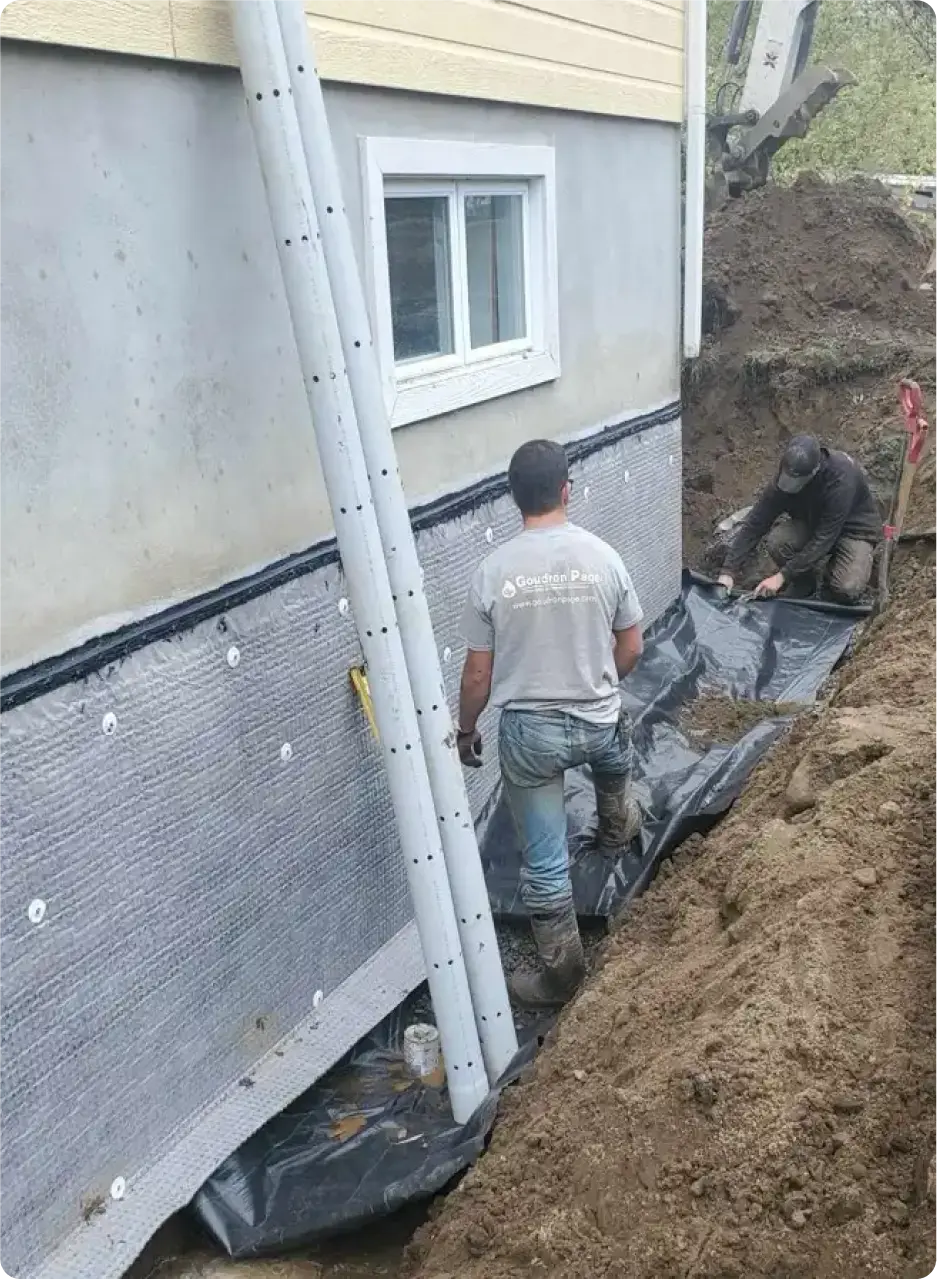
A French drain is a pipe designed to drain water from around the foundation. It removes any water buildup around the foundation and prevents water from seeping into the foundation walls.
The water collected by the French drain is directed to a safe location, such as a sump pit, a retention basin, or directly into a municipal drainage system, depending on local needs and regulations.
At Goudron Pagé, we have been installing BNQ-compliant interior and exterior French drains since 1987 throughout the Laurentians, Lanaudière and Laval.
The main uses of a French drain
Surface water protection
If your home is located in an area where surface water can accumulate and cause damage, a French drain will intercept and drain this water away from the foundation.
If your home is built on water-retaining soil, or if the water table is high, groundwater can seep into the walls of your home. A French drain will intercept the groundwater and direct it to a remote location.
Flood prevention
In areas where flooding is common, a French drain can be used to prevent flooding by removing surface water before it causes damage.
What is the role of a French drain?
During heavy rain or snowmelt, it’s common to see water build up around the foundation.
Without proper drainage, the water table beneath your home can even rise several feet and put pressure on the foundation walls and basement slab.
The role of a French drain is to keep the water level below the footings, preventing water from making its way through the footing joint, a floor crack or even through concrete blocks.
In Quebec, all residential homes built since 1955 must be equipped with a French drain. As a result, most homes today have this type of drain.
What is a BNQ French drain?
BNQ is a quality standard established by the Bureau de normalisation du Québec (BNQ) for French drains used in Quebec construction.
BNQ French drains must meet specific design, sizing and performance criteria to ensure optimal function and a long service life.
Choosing a BNQ French drain means investing in a reliable, durable solution that meets the highest standards, effectively protecting your home’s foundation and value.
Exterior French drain installation steps in Quebec
Key steps our team of experts follows to install an exterior French drain in Quebec
Digging a trench
We start by digging a trench around the area where we want to control the water, close to the foundations of a building.
Laying the gravel bed
The base of the trench is then filled with a layer of gravel.
The gravel helps filter out large debris and allows water to flow freely to the drain.
Pipe installation
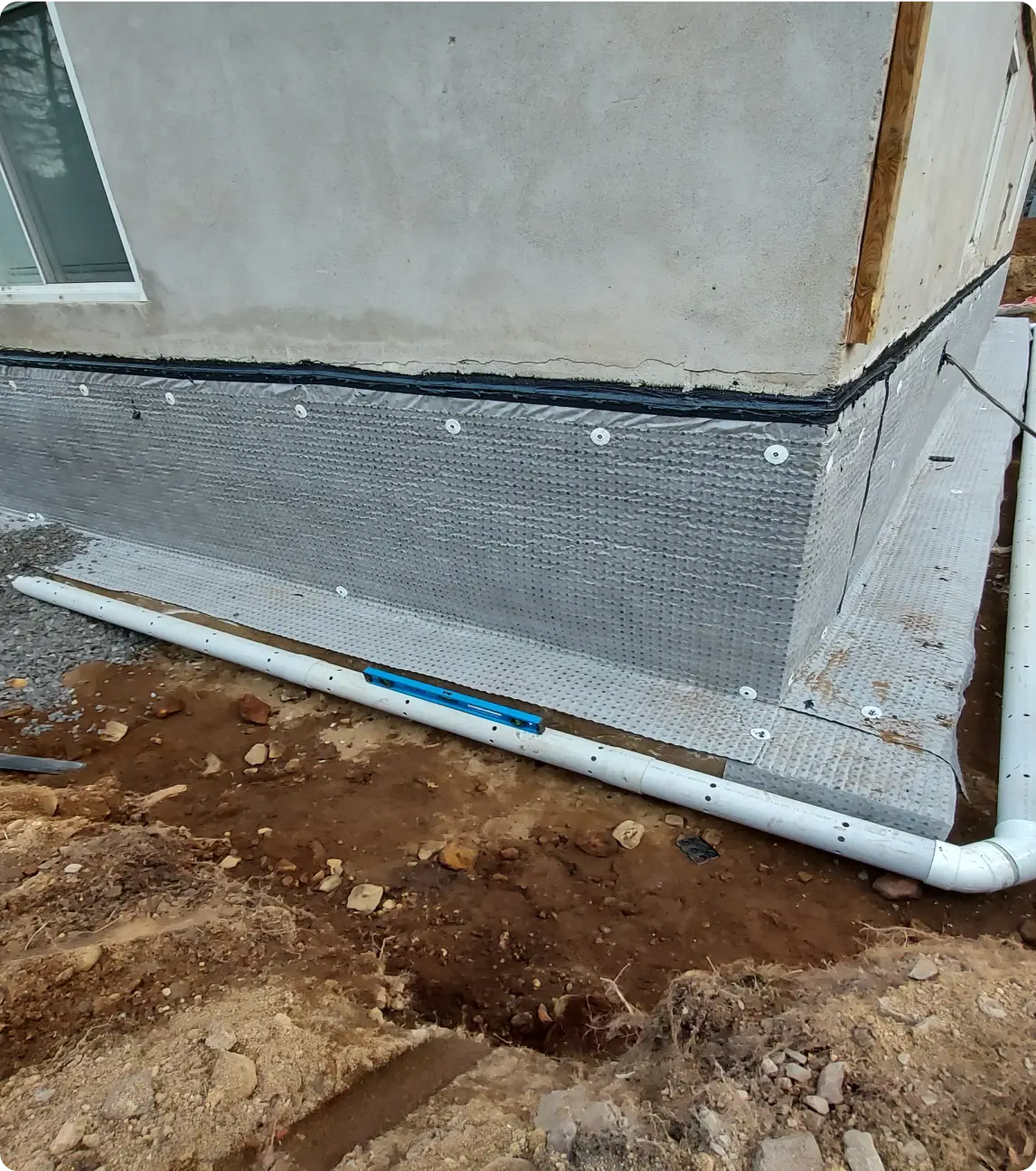
A perforated pipe is placed in the center of the gravel layer.
Perforations in the pipe allow water to seep into it from the surrounding soil.
Lining the pipe
The pipe can be lined with a geotextile, which prevents sand, soil and small particles from entering the pipe while allowing water to pass through.
A layer of gravel can also be used.
Freeze protection
In Quebec, it’s essential to add insulation, such as extruded polystyrene, above the gravel to protect the drain from freezing.
Final fill
The top layer of the trench can be covered with soil, turf or pavers, depending on the landscaping.
This cover helps to visually integrate the drain into the landscape while allowing water to infiltrate the trench.
Finishing
We restore the landscaping to its original state, respecting the drain cover to allow easy access for future inspections.
Interior or exterior French drain: what's the difference?
Did you know there are two ways to install a French drain? Depending on your home’s situation, one may be more advantageous than the other.
Exterior French drain: protection at the source
Installed all around the foundation, an exterior French drain captures water before it reaches the concrete walls.
It’s the ideal solution for new construction or major foundation renovations, since it requires full excavation.
It offers the best long-term protection against water infiltration and moisture.
Interior French drain: a practical, effective solution
An interior French drain is installed along the slab, inside the basement.
It’s ideal when water is already seeping in and digging outside is difficult or costly (decks, pool, limited space, etc.). It quickly drains water and dries out the foundation without major excavation.
How to choose between an interior and exterior French drain?
The choice depends on several factors:
- The current condition of your foundation
- Exterior access to the building
- Your budget and the urgency of the situation
At Goudron Pagé, we assess every property to recommend the most suitable, long-lasting solution. Whether it’s an interior or exterior French drain, our goal is to protect your foundation and prevent water infiltration for years to come.
Frequently asked questions about French drain installation
Do all homes in Quebec need a French drain?
In Quebec, residential homes built since 1955 must be equipped with a French drain. Older homes sometimes don’t have one, or have a drain that no longer works. An inspection can confirm whether your property is properly protected.
Can a French drain be installed without excavating around the house?
Yes. An interior French drain is installed along the slab, inside the basement, with no exterior excavation. It’s the ideal solution when water is already seeping in and outside access is difficult: a deck, a pool or limited yard space. Goudron Pagé assesses every foundation to recommend the most durable option.
How do I know if my French drain needs to be replaced?
Water seeping in at the footing joint, basement moisture or odours, efflorescence on the walls or iron ochre deposits are common signs. A camera inspection can confirm the condition of the drain.
How do I properly maintain a French drain?
To properly maintain a French drain, it’s crucial to check it regularly for any signs of blockage and to clear out accumulated debris. Also make sure the ground around the drain is properly sloped to prevent standing water from seeping into the system. Professional cleaning also helps extend its lifespan.
How do I get a quote for French drain installation?
Fill out the form below, call us at 450-432-5831 or email us at info@goudronpage.com. A member of our team will assess your foundation and recommend the right solution, interior or exterior. Financing of up to $100,000 is also available.
Contact us
Would you like to estimate the work involved?
Do you have visible cracks in your foundation? Do you need to replace your French drain?Or do you need excavation services?
Don’t wait until it’s too late, avoid water damage by contacting Goudron Pagé!
We travel throughout the Lanaudière, Laurentides and Laval regions.
Receive your quote quickly!

Our process enables you to obtain the funds you need to bring your projects to fruition with complete peace of mind, up to a maximum of $100,000.